
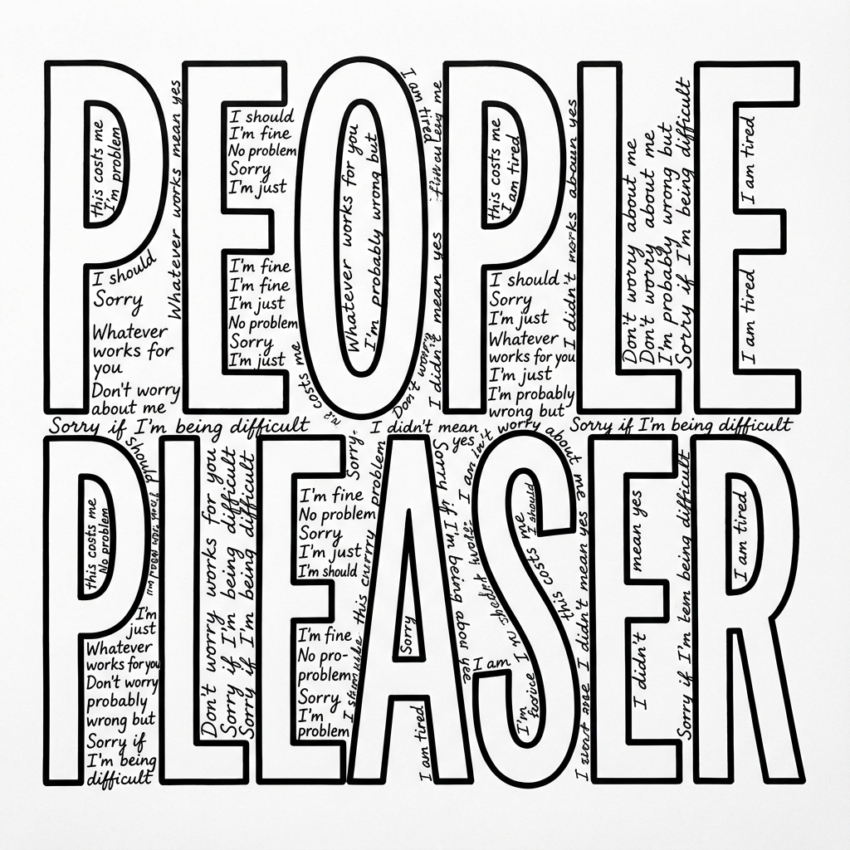
There’s a kind of shame in being called a people pleaser.
It’s not loud. It’s subtle.
It’s the way the word sounds like a flaw dressed up as a personality trait.
When people say it, they usually mean it lightly. Sometimes they even smile. As if it’s harmless. As if it’s endearing. I usually smile back. I never tell them it stings. I never tell them it feels like being told I don’t have a spine, or worse, that I don’t have a self.
I take it quietly. Like I take most things.
Later, I replay the conversation. I imagine the version of myself who was firmer. Braver. The one who didn’t rush to reassure. The one who let the silence sit. The one who didn’t immediately translate their needs into something more comfortable for everyone else.
That version of me always sounds so clear in hindsight.
What people don’t see is how much restraint it takes to be agreeable all the time. How much swallowing and smoothing and redirecting happens just beneath the surface. That pressure doesn’t disappear. It collects.
And sometimes, rarely but honestly, it spills over.
Sometimes I get angry enough to snap. To say the thing I’ve been holding back, sharp and unfiltered. It surprises everyone. It surprises me. And the moment it happens, the shame doubles.
Because now I’m not just a people pleaser. Now I’m “too much.”
So I apologize. Quickly. Thoroughly. I overcorrect. I explain myself. I smooth the damage. I make myself smaller than before. I become even more careful, even more accommodating, as if I can undo the moment by disappearing harder.
That cycle is exhausting.
What hurts most isn’t that I want to please people. It’s that I feel embarrassed by how much I want it. That I judge myself for it. That I wish I were braver, firmer, less afraid of being misunderstood or unloved.
I don’t want to swing between silence and eruption.
I don’t want to rehearse courage only in hindsight.
I don’t want my anger to be the only place my honesty feels allowed.
What I want is steadiness.
I want to be able to say what I mean while I’m still calm. I want to hold my ground without turning it into a performance or an apology. I want to trust that being direct doesn’t make me cruel, and being firm doesn’t make me unsafe.
I’m learning that the goal isn’t to stop caring.
It’s to stop abandoning myself in the process.
So if I’m slower now.
If I pause before answering.
If I sound different than I used to.
That’s not regression.
That’s not attitude.
That’s me practicing being brave in real time.
Not after the fact.
Not in my head.
But here, while it still counts.